Skip to content
Have you ever received a message where someone casually dropped “JP” and you paused for a second, wondering what it actually means? 🤔 You’re not alone. In today’s fast-paced digital conversations, abbreviations like JP are everywhere. They save time, add personality, and sometimes… cause confusion.
In this complete guide, we’ll break down the JP meaning in text, its different interpretations, real-life usage examples, origin, and when you should (or shouldn’t) use it. By the end, you’ll understand this slang like a pro 💯.
What Does JP Mean in Text? 📱
The abbreviation JP in text messaging commonly stands for:
- Just Playing 🎮
- Just Pretending 😄
- Joking 😂
Most of the time, people use JP to clarify that they are not being serious. It’s similar to saying “just kidding” or “I’m joking.”
Example:
“You owe me $100 😜 JP!”
Here, the sender quickly reassures you that they are not serious.
Why Do People Use JP? 🤷♂️
In digital communication, tone can be tricky. A simple message can easily be misunderstood. That’s where JP becomes useful.
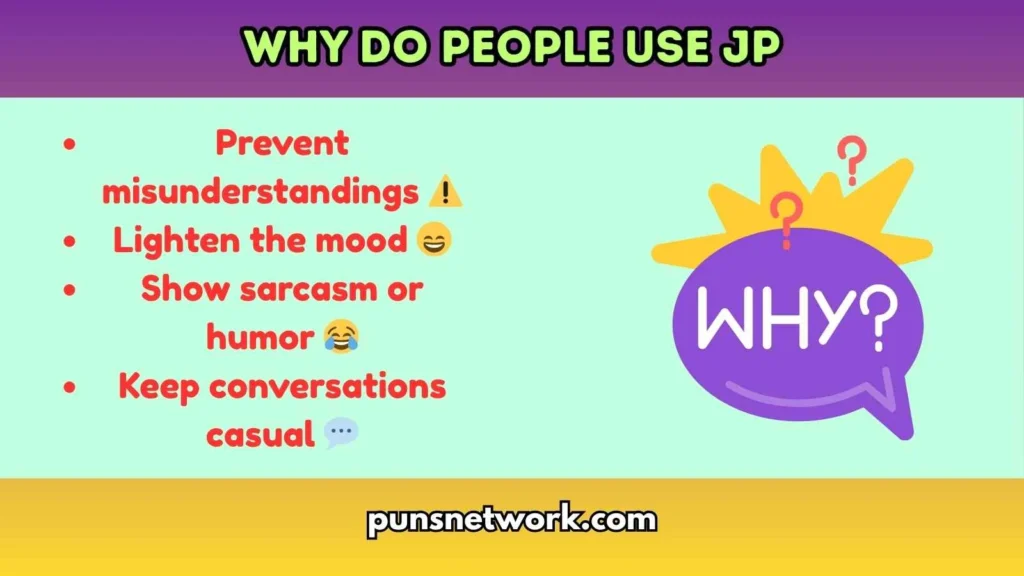
People use it to:
- Prevent misunderstandings ⚠️
- Lighten the mood 😄
- Show sarcasm or humor 😂
- Keep conversations casual 💬
In short: JP helps you sound friendly and playful rather than rude.
Different Meanings of JP in Text 🧠
Although “Just Playing” is the most popular meaning, JP can have multiple interpretations depending on context.
| Abbreviation | Meaning | Usage Context |
|---|---|---|
| JP | Just Playing | Casual jokes |
| JP | Just Pretending | Roleplay or teasing |
| JP | Joking | Clarifying humor |
| JP | Japanese (less common) | Context-specific |
👉 Always look at the conversation context to understand the correct meaning.
Origin of JP in Texting 📜
The rise of JP comes from the early days of internet chatrooms and SMS texting. Back then, character limits pushed users to shorten phrases.
Instead of typing:
- “Just kidding”
- “I’m only joking”
Users began using shorter forms like:
- JK
- JP
Over time, JP evolved into a widely accepted slang term, especially among younger audiences and gamers 🎮.
JP vs JK – What’s the Difference? ⚖️
Many people confuse JP with JK (Just Kidding). While they are similar, there’s a subtle difference.
| Term | Meaning | Tone |
|---|---|---|
| JP | Just Playing | More playful and casual |
| JK | Just Kidding | More common and direct |
Tip: Use JP when you want a lighter, playful vibe. Use JK when clarity is more important.
How to Use JP in Conversations 💬
Using JP correctly is all about timing and tone.
1. After a Joke 😂
“You’re banned from talking to me forever 😆 JP!”
2. To Soften Sarcasm 😏
“Wow, you’re so slow today 😜 JP”
3. In Friendly Teasing 😄
“You’re the worst teammate ever 😂 JP”
4. In Gaming Chats 🎮
“I carried the whole team 💪 JP”
When NOT to Use JP 🚫
Even though JP is fun, it’s not suitable everywhere.
- Formal conversations ❌
- Work emails ❌
- Serious discussions ❌
- Emotional situations ❌
Example mistake:
“I’m sorry for your loss JP”
👉 This would sound insensitive and inappropriate.
JP Meaning in Social Media 📲
On platforms like Instagram, Snapchat, and TikTok, JP is commonly used in captions and comments.
Examples:
- “I woke up like this 😎 JP”
- “Best dancer in the world 💃 JP”
- “I never eat junk food 🍔 JP”
It adds humor and keeps the tone light and relatable.
JP in Different Age Groups 👥
Not everyone uses JP the same way.
- Teens: Frequent use in jokes and memes 😂
- Young adults: Casual texting 💬
- Professionals: Rarely used ❌
👉 Understanding your audience is key before using slang like JP.
Real-Life Examples of JP 🧾
Here are some everyday conversations where JP fits naturally:
Friend: “You forgot my birthday 😡”
You: “Oops 😅 JP I didn’t forget!”
Gamer: “I’m quitting this game forever 😤 JP”
Sibling: “I’m your favorite, right? 😏 JP”
Common Mistakes People Make ❌
Even simple slang can be misused. Avoid these common errors:
- Using JP in serious conversations
- Overusing it in every sentence
- Assuming everyone understands it
- Using it without context
Tip: Always match your tone with the situation.
Similar Slang Terms Like JP 🔄
If you want to mix things up, here are similar expressions:
- JK – Just Kidding
- LOL – Laugh Out Loud
- LMAO – Laughing My Ass Off
- IDK – I Don’t Know
- SMH – Shaking My Head
Is JP Still Popular in 2026? 📈
Yes! While slang evolves quickly, JP remains relevant because:
- It’s short and easy to type ⌨️
- It conveys tone instantly 💬
- It fits modern casual communication 📱
However, newer slang keeps emerging, so its usage may shift over time.
Pro Tips for Using JP Like an Expert 💡
- Use it only in casual conversations
- Pair it with emojis for clarity 😄
- Don’t overuse it
- Know your audience
- Always consider tone
“Good communication isn’t just about what you say, but how you say it.”
FAQs
1. What does JP stand for in texting?
JP usually means “Just Playing”, indicating a joke or non-serious statement.
2. Is JP the same as JK?
No. While both mean joking, JP feels more playful, while JK is more direct.
3. Can JP be used professionally?
No. It’s best to avoid slang like JP in formal or professional communication.
4. Is JP popular among teenagers?
Yes. Teens and young adults commonly use JP in casual chats and social media.
5. What is the safest way to use JP?
Use it after a joke to clarify tone and avoid misunderstandings.
Conclusion
The JP meaning in text is simple yet powerful. It helps express humor, soften messages, and keep conversations friendly.
Whether it stands for “Just Playing” or “Joking”, its purpose remains the same—to make communication feel more human.
But remember, context matters. Use JP wisely, avoid it in serious situations, and always consider your audience.

Charlie Green is the creative mind behind PunNetwork, a growing online hub dedicated to exploring the fun, evolving world of words, meanings, and internet slang. With a deep passion for language and digital communication, Charlie specializes in breaking down complex terms into simple, relatable explanations that readers of all ages can understand.